

On this page:
- What is a stoma?
- Is there just one type of stoma?
- How does a stoma work?
- How do I learn to cope with a stoma?
- Common questions
- Where can I find out more?
This page provides a brief overview of the creation of a stoma as part of ovarian cancer surgery. For more detailed information about stomas, stoma care and how to cope with a stoma:
- Order or download our guide, Ovarian cancer and stomas
- Contact our support line to speak to one of our specialist nurses on 0808 802 6000
What is a stoma?
When ovarian cancer is more advanced at the time of diagnosis, it will sometimes spread to the surface of the bowel (part of the digestive system).
In these cases, in order to ensure that as much of the cancer as possible is removed, surgery may include removing part of the bowel.
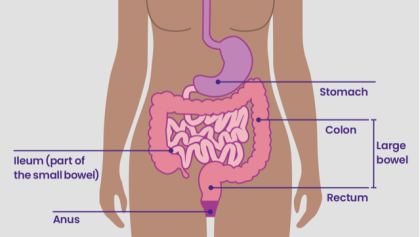
Sometimes the affected area of the bowel can be removed and the two ends joined back together. But if this isn't possible your body will need a new way to get rid of faeces (poo).
To do this, your surgeon will make an opening through the wall of your abdomen (tummy) and bring the end of the bowel through the skin. This is called the creation of an ostomy or stoma (an artificial opening). Any poo is then collected in a stoma bag which is attached to your tummy.
Is there just one type of stoma?
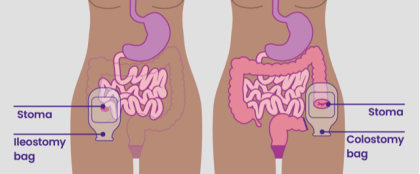
There are two different types of stoma that you might have after ovarian cancer surgery. The type that you have and the name it's given depends on which part of the bowel your surgeon needs to use:
- A colostomy is formed from the large bowel (colon) and produces a more solid poo.
- An ileostomy is formed from the small bowel (ileum) and produces a poo that is more like porridge.
In both cases the open end of the bowel is sewn onto the skin and is called a stoma.
- What does a stoma look like?
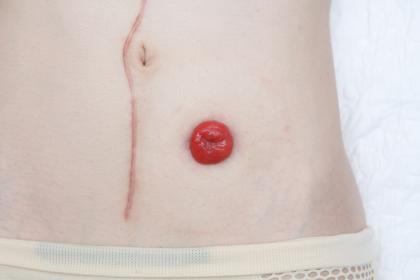
Most stomas will be a pinkish-red colour and moist to touch (like the inside of your mouth) but everyone’s stoma will be different in size and shape. Some are quite short and sit flat against the tummy, while others stick out a little. Stomas look similar to your lips when you purse them together. There are no nerves in a stoma so it won’t hurt to touch.
- When will I find out if I need a stoma?
It’s normal to feel overwhelmed or anxious about your operation. Ask your surgeon to explain things more than once or in a different way to help you understand.
If it’s clear that the cancer is affecting your bowel, and you know that your operation will involve creating a stoma, you will also talk about where the stoma will be on your body. This is usually the left-hand side of your tummy for a colostomy and the right-hand side for an ileostomy.
Your surgeon will explain things to you based on your specific situation. You should then be able to speak to a Clinical Nurse Specialist (CNS), sometimes called a stoma nurse and ask questions about what to expect.
A nurse came to mark my tummy with a permanent marker on both the left and right sides. When doing this she asked how I wore my clothes – high waisted or low – so some consideration could be given to where the stoma was sited.
Sometimes a surgeon won’t know that you need a stoma until they’re operating. In these cases a stoma may be formed as part of an emergency procedure. These unexpected and unplanned stomas can be particularly difficult to cope with and may come as a shock. Speak to your surgeon about this before the operation if it’s something you’re worried about.
If your stoma was unplanned, you might experience shock and feel a loss of control. These feelings are understandable because your mind hasn’t had time to prepare. Give yourself permission to feel unsettled and seek space to talk, whether with a professional or someone who understands, so that the story of what happened can start to make sense.
- Is a stoma permanent?
Yes, in some cases of ovarian cancer a stoma can be permanent. Often, it’s intended to be temporary (only for a limited amount of time). This means that at some point in the future you may be able to have surgery that means you no longer have the stoma. This is called stoma reversal. It’s important to remember that all cases are different and you would need to discuss your situation with your surgeon and healthcare team.
How does a stoma work?
Your bowel will still work as normal but the poo will come out of the stoma into the stoma bag. Your stoma just means your bowel opening is in a different place from before.
A removable bag will be fitted snugly around your stoma and this will keep the poo contained as it leaves your bowel. The bag will need to be emptied and/or changed regularly. There are lots of different stoma bags and the type you have will depend on the type of stoma you have. You will pass urine (wee) as normal.
Your stoma nurse will show you how to look after your stoma. This includes changing your stoma bag and getting rid of used bags. They will also talk to you about how to reorder the supplies that you need to manage your stoma. Make sure you understand this process so that you feel confident to order them in future. You can also ask them what to do if you would like to change the supplier of your stoma bags at any point.
Stoma bags can be cut to your precise stoma size template after your stoma has settled down in size (about 6-8 weeks after surgery). This makes changing them much easier and quicker. It can take time to find the right stoma bag for you. Some bags seem to stick better than others to my skin. Finding the right level of adhesive for my skin was important to avoid leaks and improve confidence. I have settled on my third type of bag at the moment. Don’t give up finding the right bag for you!
Ask questions if you’re unsure about anything: no question is too silly or too small. Be patient with yourself as you get used to your new routine and take your time to clean your stoma carefully. You may also be given written instructions or photographs showing how to change your stoma bag which some people find helpful.
There are resources that can help you access more public toilets, quickly across the UK:
- Bladder and Bowel UK’s Just Can’t Wait Card: this card can be shown to get quick access to toilets at public venues such as cafes, restaurants or other businesses.
- Disability Rights UK’s Radar key: this key provides access to locked public toilets around the UK.
- A Hidden Disabilities Sunflower lanyard can help signal to others that you have a non-visible disability and may need quick access to toilets.
Order our Ovarian cancer and stomas guide
Download our Ovarian cancer and stomas guide
How do I learn to cope with a stoma?
Learning to live with a stoma is both a physical and psychological adjustment. Even when you understand why it was needed, the reality of it can feel strange, or hard to accept. For some, the thought of having a stoma can be harder to cope with than the ovarian cancer diagnosis itself.
Coping begins with familiarity. In the early days, every sensation can feel strange; the rustle of the bag, the pull on your skin, the awareness of something new attached to your body. You may find yourself checking often, or the opposite - avoiding mirrors or not wanting to touch the area. This is common because you're trying to re-establish trust in a body that may look and feel different.
As you become more comfortable with how your stoma works, this hyper-awareness begins to settle. Building confidence in your body can take time, but it often starts by noticing rather than avoiding. It can help to spend small, mindful moments becoming familiar again: feeling the movement of your tummy as you breathe, resting a hand near your stoma, or quietly noticing its presence without any judgment. This means noting that your stoma is there without attaching emotions to it or judging it in any particular way. These small acts signal to your nervous system that not everything unfamiliar is unsafe and slowly restore a sense of ownership over your body.
Your emotions may change often. You may feel relief, grief, frustration, and pride, and sometimes all in the same day. Each feeling is part of the body’s effort to adapt. Letting them surface without self-criticism helps the process along and allows safety and confidence to grow in their own time.
- Where can I find more support?
Support can take different forms:
- Your stoma nurse will support you after the surgery to help you get used to your stoma and how to care for it. They will help you to regain confidence in daily routines and will be happy to answer any questions.
- You might also find it helpful to get in touch with your community hospital (a small hospital that provides a range of services to the people living in your area) to ask if there are community stoma nurses in your area. Community stoma nurses will be able to help and support you with your stoma when you’re at home.
- Speaking with others who live with a stoma can bring a more grounded understanding of what life after surgery may look like. It can also help you feel less isolated. Join the Ovarian Cancer Community so speak to others.
- Mental health professionals familiar with stoma care can help support you with the emotional impact of these changes and develop ways to manage them, restoring a sense of continuity between how you feel and how you live.
Common questions
Below are answers to common questions you may have about caring for your stoma. If you have any questions you can also call our support line or the 24-hour Colostomy UK helpline.
- What if I'm having problems with my stoma?
It can take some time to get used to having a stoma but it’s important that you feel as comfortable as possible when wearing the bag. If you have any problems or concerns you should always speak to your stoma nurse. These may include:
- changes in the size and shape of your stoma or how it works
- unusual symptoms including bleeding or tummy pains
- concerns around changing your stoma bag or stoma care.
If you have any questions call our support line or the Colostomy UK helpline.
- I'm worried my stoma will smell. What can I do?
Stoma bags are odour-proof so your stoma won’t smell as you go about your day-to-day activities. There will be a smell when you’re emptying or changing your stoma bag – but everyone makes smells when they go to the toilet! If you’re still worried about smell there are odour neutralisers available which can be put inside your stoma bag and can help you feel more confident. These are drops or granules that help to reduce any smell.
- How can I be sure the stoma bag is watertight? What if it leaks?
Stoma bags are watertight and once you find one that suits you, you should have very few problems with leaking. While you’re getting used to your stoma it’s normal to have worries about how watertight your stoma bag is. The thought of it leaking can be embarrassing and upsetting. But there are lots of different types of stoma bags and all of them are specially designed for their purpose. As you recover from your operation, or if you change weight, you may need to adjust the fit of your stoma bag as your stoma may change size. Your stoma nurse will work with you to find the right bag for you.
- Is there anything I should or shouldn't eat or drink?
You should be able to return to your usual diet soon after the operation, but everyone reacts to food and drink in different ways. There may be certain things you’re told not to eat or drink depending on the type of stoma you have.
In general you should aim to eat regular well-balanced meals with high protein snacks in between, particularly for the first few weeks after surgery. Make sure to drink plenty of fluids and stay hydrated.
If you have an ileostomy, drinking too much plain water can dilute the level of salts (electrolytes) in your body and this can lead to dehydration. This is when your body loses more fluids than it takes in. This is because salts help your body to take in and retain water. You can drink non-carbonated isotonic drinks (sports drinks) to stay hydrated. These drinks contain salts which can be help you both keep a healthy level of salts and stay hydrated.The consistency of your poo can change with a stoma. With a colostomy you can still become constipated (find it difficult to poo) or have diarrhoea (loose, watery poo). Some drugs, including painkillers, can also cause constipation so you may be told to eat more fibre to help. This includes wholemeal and wholegrain breads, cereals and pasta.
With an ileostomy the consistency of your poo will also vary but it won’t be thicker than toothpaste or porridge.
If you have an ileostomy it’s best to avoid foods high in fibre for the first few weeks after the surgery to prevent blockages and too much output (how much you poo). This is because too much output can lead to dehydration. If your poo is too loose it may be useful to drink rehydration drinks or take a low dose of medication to slow down the bowel. Your stoma nurse will be able to give you advice on this.
You might also find that certain foods or drinks (such as alcohol) produce more wind from your stoma than others. Some foods are also much harder to process (such as apple peels or nuts). This might depend on whether you have a colostomy or an ileostomy. Speak to your stoma nurse if you have any questions about what foods you should eat or avoid.
How diet affects your stoma varies from person to person. When you want to try a different food, try a small amount first to see how it effects your stoma. It might help to keep a food diary to look for patterns and symptoms so that you can work out the best balance of food and drink for you.
For more information, watch Colostomy UK's video explaining how diet may affect your stoma.
- Can I travel as usual?
Having a stoma shouldn’t stop you from travelling.
If you’re flying, you don’t need to remove your stoma bag or medical equipment when going through airport security, and you’re entitled to request a private search if needed. Planning ahead, booking assistance where needed, and carrying medical documentation such as a travel certificate or doctor’s letter can help make airport security and travel easier. Knowing your rights and what to expect can help you travel with confidence and dignity.
Colostomy UK work with a number of major airports across the UK to increase awareness of the accessibility needs of travellers with a stoma.
If you have any problems or concerns you should always speak to your stoma nurse. These may include:
- changes in the size and shape of your stoma or how it works
- unusual symptoms including bleeding or tummy pains
- concerns around changing your stoma bag or stoma care.
You can also call our support line or the Colostomy UK helpline.
Where can I find out more?
- Order or download our guide, Ovarian cancer and stomas for lots more information and support to help you cope with a stoma.
- Our support line provides confidential information, support and signposting for anyone affected by ovarian cancer.
- Colostomy UK provides support, information, reassurance and practical advice to anyone who has or is about to have stoma surgery in the UK. They also have a 24-hour stoma support line, which offers experienced-based support from volunteers, and a closed Facebook group.
- The Ileostomy and Internal Pouch Association supports people living with an ileostomy and their families, friends and carers.