Referral to a clinical genetics team
Most people will be offered genetic testing with their treatment team. But you will be referred to a clinical genetics team if:
you have a complex family history and need a more in-depth assessment
your results show you have a gene variant or your result is uncertain. Everyone who has a gene variant or an uncertain result is referred to the clinical genetics team. This includes those who had their genetic test done by their treatment team.
- Who's in a clinical genetics team?
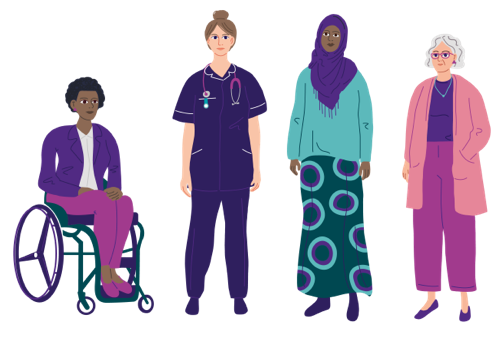
If you’re referred to a clinical genetics team, the main people you will come across will be:
A clinical geneticist – a doctor that specialises in medical conditions linked to genomics. Genomics is the study of DNA and how genes work with each other and the environment.
A genetic counsellor – who takes and analyses information about your family history information to find out your risk of inheriting or passing on a gene variant. They share the possible impact of the test results to help you make an informed decision about testing. If after testing, you’re found to have a gene variant, a genetic counsellor will help you to adjust to the news. They will also support you to make decisions around having a gene variant, such as managing your risk of breast cancer.
A clinical or genomic scientist – who looks at your blood or tumour samples and works out the results of your genetic test.
Genomic practitioners (GenPs) or genomic associates (GenAs) – who support the clinical genetics team by asking about your family history and health records. They also get your consent for testing.
If you’re referred to the clinical genetics team you will usually have appointments at a clinical genetics centre or clinic. These may happen in the same place as your ovarian cancer treatment. Find your nearest clinical genetics service.
What should I think about before having genetic testing?
It’s important to think about whether you want to have genetic testing. You may find it helpful to speak to your oncologist, CNS, family and friends. You can also talk to a genetic counsellor if you have already been referred to the clinical genetics team. You may want to think about the potential benefits and disadvantages of having a genetic test.
- Benefits of genetic testing
More certainty about how the cancer developed – a genetic test can give you more certainty about whether the cancer is linked to a gene variant. Some people find it helpful to have an explanation for why they developed cancer.
Access to maintenance treatments – having a gene variant may mean you have more options for PARP inhibitors as a maintenance treatment after your treatment for ovarian cancer.
Access to treatment and tests to manage your risk of breast cancer – some gene variants have a higher risk of developing other cancers. For example, if you have a BRCA1, BRCA2 or PALB2 gene variant you will have a higher risk of developing breast cancer. This is compared to those that don’t have a gene variant. Find out more about managing your risk of other cancers.
Information for your family members – if you have a gene variant, your family members can find out if they also carry the gene variant. If they do, they can access preventative treatment and screening tests to manage their risk of cancer. Find out more about information for family members.
- Disadvantages of genetic testing
Emotional impact – a positive result may be difficult to process. Some people find it hard to cope with knowing that they might have passed on the gene variant to their children.
Inconclusive results – Sometimes the results of genetic tests are inconclusive. This means it’s not known if you have a gene variant or not. This can leave you feeling uncertain about the cause of the cancer. Find out more about the results of genetic tests.
If you’re struggling to decide whether to have the genetic test, you will have the option to talk to your treatment team. If you have been referred to the clinical genetics team, you may speak to a genetic counsellor instead.
“I wanted the genetic testing as quickly as possible. At the time I was diagnosed, PARP inhibitors as a maintenance treatment were available only for people with BRCA gene variants and they were having good results.” Sarah
“It was important to me to have genetic testing because I have two daughters. I hadn’t heard of the BRCA gene variants until two weeks after my surgery for ovarian cancer. As soon as I heard about them, I wanted to get tested. I didn’t want my girls to unknowingly be at risk of hereditary ovarian cancer or breast cancer.” Jayne
Which family members might be affected?
If you have a gene variant, your family members may also have it. Your first-degree relatives will be offered cascade testing. This is a process to find all your immediate family members who carry the same gene variant.
Your second-degree relatives will be offered cascade testing if your shared first-degree relative is found to carry the same gene variant. Cascade testing will continue to test the first-degree relatives of everyone who carries the same gene variant.
- First-degree relatives
Your first-degree relatives are your:
parents - mother and father
siblings – sisters and brothers
children – daughters and sons.
- Second-degree relatives
Your second-degree relatives are your:
grandparents
aunts and uncles
nieces and nephews
half-siblings.
Not all of your first-degree relatives may be available for genetic testing or want to have it. If this is the case, then your second-degree and more distant relatives should ask their GP for a cancer family history risk assessment referral. They will be referred to their local clinical genetics service who will assess whether genetic testing is right for them.
Only relatives on the same side of the family will be tested. For instance, if your mother’s family has the gene variant, your father’s relatives won’t be tested. Your male family members on the same side of the family are offered genetic testing even though they can’t develop ovarian cancer. This is because some gene variants also increase the risk of cancers that affect men. Men can also pass down gene variants that increase the risk of ovarian cancer to their own children.