

On this page:
- The impact of ovarian cancer on sex and intimacy
- Common questions about sex and intimacy
- More support and information
What impact can an ovarian cancer diagnosis have on sex and intimacy?
Getting an ovarian cancer diagnosis, and having treatment, can impact on how you feel about yourself emotionally and your sense of yourself as a sexual being. It can also affect the dynamic within your relationship if you're in one.
You may find you have an increased need for emotional, or physical, closeness. You may withdraw or feel unhappy or nervous about being sexual. Or you may think that being sexual again after treatment feels like a sign that life is getting back to normal. However you feel, it’s important that you’re able to find the right balance for you. Communicating with your partner, if you have one, about how things feel for you, and why, is also important.
Is how I’m feeling normal?
It’s normal for your want or need for sex and intimacy to keep changing throughout life and it’s normal to want, or not want, to be sexually intimate. Intimacy doesn’t only mean having sex. It may include kissing, cuddling or fondling (touching) with a partner or yourself. How you feel sexually may or may not have changed because of your diagnosis and/or treatment.
You may not be thinking about sex if you’ve just had a diagnosis of ovarian cancer. It may also take a while before you’re ready to restart your sex life if you’ve had major surgery or you're experiencing side effects of other treatments.
It’s common to experience some short-term physical changes as a result of ovarian cancer treatment. Sometimes these changes can continue for longer. These changes impact everyone differently. Anything that affects our sense of self can affect how we feel about sex and intimacy. Sex can feel hard to return to or having sex during this time can help you feel cared for, loved and secure. Your response will be very personal.
If your feelings and experiences are worrying you and you’re unsure about where to seek help or you feel embarrassed to talk about them, you’re not alone. Many women in your situation experience similar feelings and help is available.
Common questions and support
- I want to have sex but I’m finding it difficult. What can I do?
Sex can feel difficult for many different physical and emotional reasons. When sex is difficult it’s common to withdraw from your partner to avoid it and in turn avoid all intimacy. Try to talk to your partner, to explain how you’re feeling and the difficulties you’re experiencing.
Problems with desire (our want to be intimate), arousal (being turned on) and orgasm (the peak of sexual arousal) are common when going through treatment and afterwards. You may want to consider talking to a professional who helps with sexual problems, such as a psychosexual therapist. This should be available to you in your local area through the NHS and you can ask for a referral from your GP or Clinical Nurse Specialist (CNS). You may want to find a private psychosexual counsellor.
- I want to have sex but it's painful. What can I do?
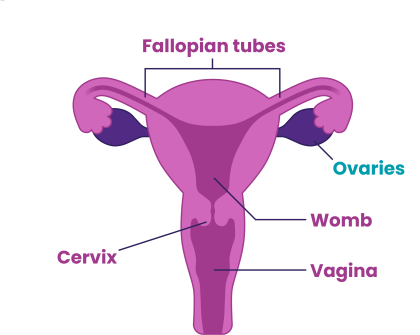
It’s quite common to experience pain when having penetrative sex if you’ve been through treatment for ovarian cancer. This is when a penis, sex toys or fingers enter the vagina (the muscular tube that goes from your uterus to the outside of your body). There are simple treatments that can help.
It’s important not to put up with discomfort or pain as this may make you withdraw from sex, or make your partner worry they’re hurting you.
Pain during and after sex is often due to vaginal dryness and/or not enough natural lubrication. This is fluid produced by the vagina to keep it moist and reduce friction when having sex.
As well as vaginal dryness, knowing that sex may be uncomfortable can cause the muscles in your vagina to tense up to protect you. This is called vaginismus and can make sex more painful. It can happen because of physical causes, but it can also happen when there's emotional distress, anxiety or low sex drive. That’s why getting help is really important.
Things that can help with pain include:
- If your vagina is dry because of hormonal changes, it may be helpful to regularly use a vaginally-applied oestrogen or a non-hormonal vaginal moisturiser. Vaginally-applied oestrogen may not be suitable for everyone so speak to your CNS or GP about what’s appropriate for you.
- If you find that you’re not fully turned on during foreplay (intimacy before having sex) and when having sex, using lubricants can help to improve sensation and increase your arousal.
- Learning to relax your tummy and pelvic floor muscles during sex can help. NHS UK has more information about treatments for vaginismus. Greater Manchester Mental Health NHS Foundation Trust also has useful information on relaxation exercises you can do yourself at home to help.
- Try out different sex positions to find which ones are more comfortable. Take your time to find out what works for you. Continuing through pain can set up cycles of anxiety for next time, and make pelvic muscles tighten more. Move to something that does feel good and try having sex again another time. This may include any type of touch that you enjoy or that feels good, whether it’s masturbation or kissing or touching a partner.
- During penetrative sex, a buffer ring (for example Ohnut®) can be worn by your partner. It helps you to control and explore the most comfortable depth of penetration for you (how deep the penis goes inside the vagina).
- Can you tell me more about lubrication?
You can buy lubricants to help with vaginal dryness. These are gels or liquids that are used during sex. The right type and amount can help to make having sex more comfortable. It can also help when using sex toys. There are many different types of lubricants which can be bought in most supermarkets, chemists or online:
- Water-based lubricants are the most common type. They often need to be applied regularly but are safe to use with all latex and silicone products including condoms.
- Silicone lubricants last longer than water-based lubricants and can be used with latex condoms but not with other silicone products such as sex toys.
- Oil-based lubricants also last longer than water-based lubricants, but they're not considered safe for use with latex products, such as condoms, or rubber sex toys.
Using an oil-based lubricant and a water-based lubricant together can increase the effect. This is called the double glide effect.
Whether you’re sexually active or not it can be helpful to regularly use a non-hormonal vaginal moisturiser to help improve vaginal dryness and other vaginal symptoms from your treatment. These are gels or liquids that are used every couple of days to help keep the vagina moist. Names of non-hormonal vaginal moisturisers include Hyalofemme®, Replens™, Regelle® and YES VM®.
- I don’t feel confident in myself. What can I do?
Your desire for and enjoyment of sex and intimacy can change depending on your general wellbeing and self-esteem (how you feel about or see yourself). Investigations and treatment for ovarian cancer are often difficult emotionally and physically. Surgery can cause a number of different physical changes including scars, hormonal changes and for some, a stoma will be formed during surgery.
Chemotherapy can cause hair loss, fatigue, tiredness and nausea or vomiting. All these factors can have an impact on how you feel about yourself and this may cause you to feel less comfortable or safe in your body. You may feel disconnected with your body and sex may be the last thing that you want right now. This is completely understandable.
Learning to reconnect with your body, understanding what your body likes now and feeling pleasure again at a pace that works for you is really important. This may be by starting to notice simple pleasant sensations again. For example the feeling of the wind on your face when out for a walk, the smell of flowers, the touch of your hands when putting hand cream on or the feeling of standing barefoot on grass. Having the space to feel pleasure in doing things that you enjoy and being in those moments can help you to reconnect with your body and be the first step in wanting to return to other forms of pleasure such as intimate touch.
It can really help to process what you have experienced with a counsellor. Speak to your CNS or GP about accessing professional support.
Watch our session on ovarian cancer and body confidence led by Gail, Lead Volunteer at Look Good, Feel Better:
- My treatment led to early menopause. Is there any specific advice for me?
Menopause (when your periods stop) usually happens naturally between the age of 45 and 55 years old. If you’re younger than this and you haven’t been through menopause naturally then surgery for ovarian cancer can cause early menopause. When this happens as a result of surgery it’s called surgical menopause.
We all have oestrogen and testosterone (sex hormones) in our bodies. The sudden loss of testosterone after because of surgical menopause can cause changes in your sex drive. Also changes in your oestrogen levels can cause vaginal dryness and painful sex.
Hormone replacement therapy (HRT) is a treatment that replaces hormones that your body has lost because of surgical menopause. It can help with reducing vaginal dryness and improving your sex drive. It may be suitable for you once your ovarian cancer treatment has finished. HRT can be local (where it’s applied directly to the vagina) or systemic (where it’s absorbed into the blood and flows around the body). Speak to your treatment team or GP to see whether HRT may be an option for you. for you.
Macmillan has more information on managing menopause because of cancer treatment.
You can also watch our session on menopause and ovarian cancer, led by Dr Diana Mansour, Consultant in Community Gynaecology and Reproductive Health:
Menopause and Cancer run online and in-person events for people affected by all types of cancer, as well as an online support community. They also have a podcast, videos and information about managing menopause after a cancer diagnosis.
More support and information
- The College of Sexual and Relationship Therapists (COSRT) is the UK’s leading organisation for therapists specialising in sexual and relationship issues. COSRT can also help you find a therapist in NHS or private services in your local area.
- Relate provides relationship support and help with sex problems for those in England and Wales.
- Relate NI provides relationship support and help with sex problems for those in Northern Ireland.
- Relationships Scotland provides relationship counselling and support for sex problems for those in Scotland.
- The Institute of Psychosexual Medicine (IPM) provides education, training and research in psychosexual medicine and can help you find a specialist.
- For support with body image Look Good Feel Better is a UK wide charity offering free confidence boosting workshops to anyone living with cancer.
- Macmillan has more information about sex and cancer.