

Community member Gill shares her experience of ovarian cancer and how she hopes taking part in the Helplines Partnership photography project will prompt someone else to reach out for help.
I was diagnosed with ovarian cancer in 2017, aged 53, after experiencing months of vague symptoms which I initially attributed to menopause. I put on weight around my stomach, had extreme fatigue, and needed to wee more often. I was a special needs teaching assistant at the time and couldn't get through a 40-minute lesson without having to excuse myself to run to the toilet.
I started swimming and watching my diet in an attempt to reduce my waistline, but to my dismay, my stomach just got bigger. I had to go up a dress size in my trousers, and wear loose fitting blouses - I honestly looked pregnant.
A feline intervention that led to a diagnosis
Humbug was the kitten of a stray cat that we rescued and eventually rehomed with my daughter's friend. She was always "my" cat, but around the time I was experiencing these symptoms she became incredibly clingy, wanting to be around me, and always sitting on my lap.
Finally, on one evening I was feeling tired and lay on my bed. Humbug jumped up and landed heavily on my stomach, causing a shock of pain. As I put my hand to my stomach I was horrified to feel a mass. I contacted my GP the following morning and was quickly sent for the tests that resulted in my diagnosis of mucinous ovarian cancer.
The diagnosis of ovarian cancer was confirmed after my radical surgery, but I was told I consider myself lucky that it had been caught in the early stages and I didn’t need chemotherapy.
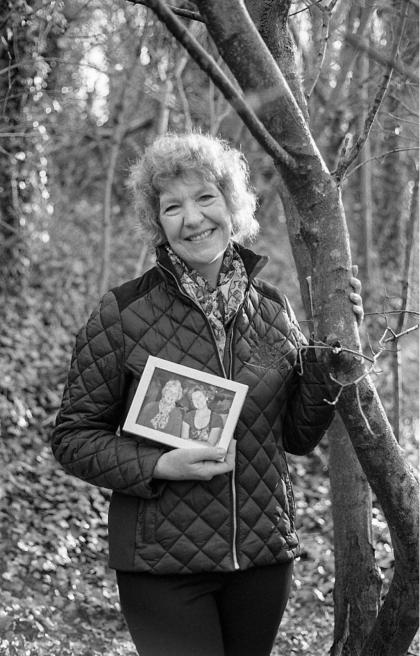
Recovering from surgery and losing my Mum
I was so shocked to receive my diagnosis as my Mum had been diagnosed with ovarian cancer several years earlier, and her symptoms were different. What was even more ironic was the fact that I'm adopted, so it wasn't even a genetic issue.
A few short weeks after my surgery my Mum's health took a dramatic turn for the worse. I moved into her apartment, and with the help of my sister in law, we looked after her. Twelve weeks after my diagnosis, my lovely Mum passed away.
I suddenly felt as though I’d been thrown into a huge storm; I was grappling with my own diagnosis, dealing with the loss of my Mum, and also wondering if I would be able to return to my physically demanding job after such major surgery.
I didn’t feel able to talk to my husband and family about my emotions, because I didn’t want to upset or worry them. I felt completely isolated and helpless, and as though I’d completely lost my identity as a competent wife and mother.
A lifeline on the other end of the phone
This is when my Macmillan nurse told me about the helplines available to me. I eventually decided to ring the Macmillan helpline, and it was one of the best decisions I’ve ever made! I was able to talk honestly about my fears without the worry of upsetting my family.
I was given advice about my return to work, offered some counselling, and also signposted to two specific helplines for ovarian cancer run by charities Ovacome and Target Ovarian Cancer.
Reaching out to the helplines was like being thrown a lifeline. They provided practical help - teaching me how to exercise safely, giving me tips on healthy eating and guiding me on my work questions. The emotional support was also invaluable. As well as gaining access to a community, a place where I could talk honestly to people who were going through exactly the same thing as me.
The Target Ovarian Cancer yoga sessions are still such an important part of my week. I can exercise in a way that I know is safe for me. Claire is a fantastic teacher, and always offers alternatives to all the exercises, so we don't push ourselves too hard.
I love the online aspect of the class, because I wouldn't be confident enough to attempt yoga in a face to face group - I would feel judged because I can't do everything I used to do before my surgery. I also love the relaxation part of the class, and often turn to the breathing exercises at night when I can't sleep and my mind starts to worry about things.
Developing in the Dark photography project
When I read about the Developing in the Dark project with Helplines Partnership, I was keen to participate. I thought it was a novel and effective way to mark Helplines Awareness Day (February 23), but also a lovely way to illustrate just how much of a lifeline helplines are.
On the day of my photoshoot, I felt quite apprehensive about what I would be doing. The days of blind panic and utter desperation I experienced after my diagnosis were very clear in my memory, and I was worried about triggering unwanted feelings.
On meeting the team, I quickly realized that my fears were unfounded. They were warm, empathetic, and made it very clear that the pace and direction of the photoshoot was driven by me.
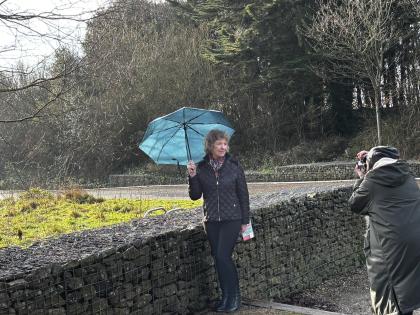
On learning that I found solace in nature, it was suggested that my photoshoot take place in Festival Gardens. My tentative suggestion of using an umbrella to represent the feeling of shelter during the storm after I contacted the helplines was readily accepted, which made me feel more confident.
The shoot itself was quite a cathartic experience; I felt as though everyone completely understood what I wanted to do. Standing amongst the beautiful trees, portraying the story of my utter sadness and subsequent journey back to peace in such a physical and literal way was one of the most powerful experiences of my life.
To be able to portray, in pictures, my mental struggle was incredibly empowering, and when I walked away from the park I felt as though I’d acknowledged something that I hadn’t been able to express before.
I'm humbled to be part of Developing in the Dark, because I think it’s such a unique and special way to promote the many helplines that are out there, and hope that my story will prompt someone to reach out for help.
We launched our Developing in the Dark campaign to raise awareness of the importance of helplines. The exhibition features powerful portraits of people whose lives have been transformed by helplines. The campaign is gaining momentum, and we are looking at ways to bring the exhibition to new audiences throughout the UK. Helplines really do change lives, and we are determined to continue raising awareness so that people get the support they need when they need it.
Using what I’ve learned with a new diagnosis
Eighteen months ago, I had another huge shock when I was diagnosed with malignant melanoma. However, unlike the first time, I was able to draw on everything I learnt from those I’ve spoken to via the helplines to help me navigate my feelings.
I can't adequately express how grateful I am for the presence of these fantastic helplines and websites. They have helped me to make sense of how my life is since my diagnosis, and it's incredibly comforting to know there are such wonderful people on hand who have offered so much help.

If you’ve been affected by this story and would like to speak to a specialist nurse, you can call our dedicated support line on 0808 802 6000 or contact us: [email protected]. We're open from 9am until 5pm, Monday to Friday.
If reading this story has helped you, join the Ovarian Cancer Community to connect with more people affected by ovarian cancer.