

Fiona was diagnosed with stage 4 ovarian cancer in 2023. Sadly, she passed away earlier this year. Carl is sharing their experience to raise awareness of the symptoms and hopefully stop other families from going through the same thing.
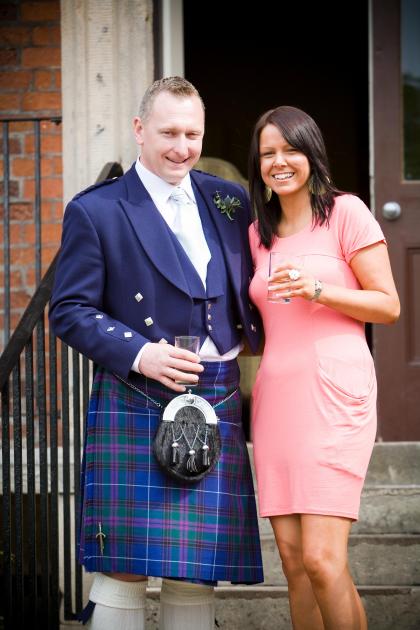
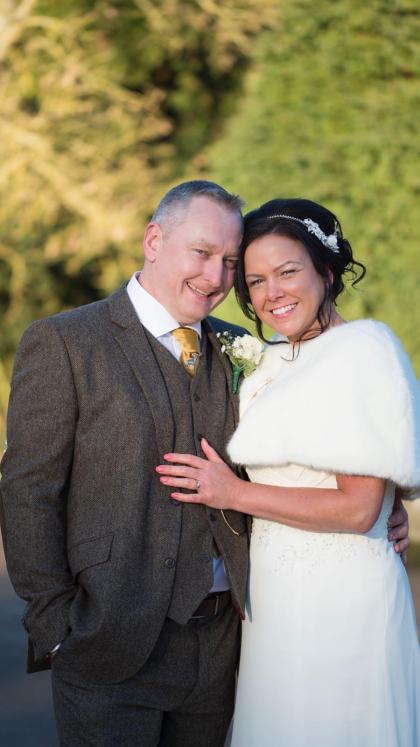
I met my wife ‘Fi’ on a plane. She was working as cabin crew, and I was a passenger on my way to a lad's holiday. I just remember thinking she was gorgeous and definitely came up with lots of silly questions just to talk to her. Thankfully the feeling was mutual and she took a chance, allowing her boss to pass on her number. We met for our first date a few days after I got back from the trip, and the rest as they say is history.
I had 20 years with Fi. We were married for nine of them and have two wonderful kids. Our lives were turned upside down three years ago when she was diagnosed with stage 4 ovarian cancer.
Changes post childbirth
Fi started to experience different period symptoms after the birth of our second child. It was a difficult 30-hour labour that resulted in her needing an operation to keep her bladder in place. She had long, heavy periods from then on.
Fi did go to the GP about it and was put on a contraceptive pill to try and control it. Then in December 2015 she was offered the coil.
This wasn’t a good option for Fi and offered no real relief of her symptoms. In fact, it made her feel worse. In early 2016 she had it removed and tried a different pill.
By 2017, Fi was coming up to her 40th birthday and still dealing with these symptoms on a regular basis. After speaking with her doctor again she was scheduled for a womb ablation. A procedure that destroys the lining of the uterus (endometrium) using heat.
A full hysterectomy was mentioned at this time, but it was decided that she was too young for a number of reasons, mainly that it would bring on early menopause.
The alation did stop her bleeding which made it a success, but looking back now I can’t help but wish that we had fought for the hysterectomy – or at least asked more questions.
Start of key symptoms?
In January 2019 Fi went back to the GP feeling depressed and with abdominal pain. She was diagnosed with diverticulitis and needed her appendix removed. That did immediately ease her pain and we continued with our busy family life.
During a holiday to the Dominican Republic in September 2022 Fi had started to feel like she was putting on weight and had a constant level of bloating. Now, I know that this is a key symptom of ovarian cancer but at the time we weren’t aware of anything about it.
As soon as we got home Fi booked a GP appointment. Sadly, she didn’t feel it was a positive experience due to a language barrier and symptoms not being listened to properly. She came away from it being treated for high blood pressure.
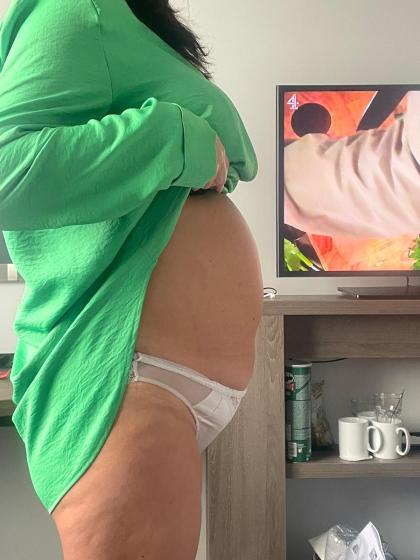
Fi experienced two GP appointments like this. Cabin crew can experience bloating more than other professions so that’s what it was put down to. However, we know that Fi’s mum had something cancerous in her womb at a similar age and needed a full hysterectomy and I’m sure she would have told the doctor this too.
Fi went back to the GP for a third time in January 2023 with the same symptoms and new ones. She had some unusual discharge and had mentioned a level of discomfort during sex. She was incredibly lethargic and just not herself. By that point her daily bloating made her look pregnant. During this appointment the GP did refer her for blood tests.
An A&E diagnosis
Two months later, still waiting for the blood test referral, Fi asked if I could take her to A&E. She’d been taking co-codamol for a while for abdominal and back pain, but after an accident on a recent flight – being hit by the trolley – she wanted to be checked over.
At first, we went to the local walk-in centre where they seemed more concerned about the amount of co-codamol she was taking rather than the reason for her pain. By this point it was excruciating for Fi, so we were then sent to the A&E department next door. Fi was sent for scans and that was when everything changed.
Fi was diagnosed with Stage 4c ovarian cancer and as they were explaining what that meant, I was just in shock. It felt like they were saying it had spread everywhere.
The treatment plan was to start with chemotherapy to reduce the cancer before surgery. It did work somewhat in shrinking the biggest tumours and in October 2023 Fi had her debulking operation. It was a success, but they couldn’t remove all the visible cancer as there was a risk of bleeding from the liver.
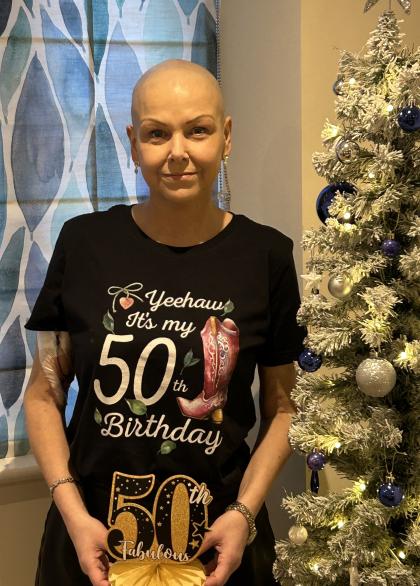
Fi recovered really well and her blood test results were pretty stable for 12 months. It was a great year, and we were able to make lots of wonderful memories together as a family.
However, it was always there in the back of your mind and we did keep asking about potential clinical trials for her to take part in. With Fi’s cancer being a rare form of ovarian cancer, mesonephric ovarian cancer, it was difficult to find anyone else with it which made researching treatment options etc. all the more challenging.
We discovered Target Ovarian Cancer on an online forum during one of our many searches. One of Fi’s amazing oncologists then suggested we look at the charity and all that it offered both in information and support.
Remembering Fi and striving to make a difference
Fi was incredibly strong throughout everything and tackled her diagnosis head on. Eventually symptoms increased and markers raised until there were no other treatment options available. We spent a final week in one of our favourite spots, the caravan, before Fi passed away in February this year.
At Fi’s funeral I chose to have Target Ovarian Cancer wristbands available and asked for donations to support the charity’s work. There’s been an overwhelming response, and we’ve raised over £4,000 already.
Thank you to all our friends and family for the continued love, strength and support.
As a couple we were often so ‘in tune’ with one another and what we believed. Fi often said, ‘everything happens for a reason’ and although I can find no reason whatsoever for this, I did always agree with her.
So, if the only reason is that I now become a champion for ovarian cancer and share our story in the hopes that I can raise awareness and help another family in a similar position, then I will take that on and run with it.
If you’ve been affected by this story and would like to speak to a specialist nurse, you can call our dedicated support line on 0808 802 6000 or contact us: [email protected]. We're open from 9am until 5pm, Monday to Friday.
If reading this story has helped you, join the Ovarian Cancer Community to connect with more people affected by ovarian cancer