


What is Gynaecological Cancer Awareness Month?
Gynaecological Cancer Awareness month is recognised in September across the world and encourages everyone to be aware of the signs and symptoms of the five gynaecological cancers.
Whilst our focus at Target Ovarian Cancer is on ovarian cancer, we recognise the importance of improved symptoms awareness and the early diagnosis of all gynaecological cancers.
What are gynaecological cancers?
There are five gynaecological cancers you should be aware of, including ovarian cancer. They are:
Ovarian
Cervical
Vaginal
Vulva
Womb
What are the symptoms of ovarian cancer?
Ovarian cancer symptoms can be difficult to recognise and easy to explain away.
Knowing the signs can empower women to trust themselves and act sooner, increasing the chances of a life-saving early diagnosis.
Symptoms of ovarian cancer
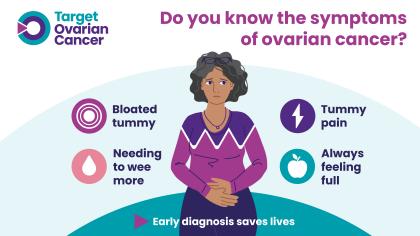
Persistent bloating (not bloating that comes and goes)
Feeling full quickly and/or loss of appetite
Pelvic or abdominal pain (that's from your tummy to the top of your thighs)
Urinary symptoms (needing to wee more urgently or more often than usual)
Occasionally there can be other symptoms of ovarian cancer:
Changes in bowel habit (e.g., diarrhoea or constipation)
Extreme fatigue (feeling very tired)
Unplanned weight loss
Any unusual bleeding from the vagina before or after the menopause should always be investigated by a GP
Symptoms will be:
New – they're not normal for you
Frequent – they usually happen more than 12 times a month
Persistent – they don't go away
Worried about your symptoms?
If you regularly experience any one or more of these symptoms, which aren't normal for you, it's important that you contact your GP. It's unlikely that your symptoms are caused by a serious problem but it's important to get checked out, even if they're mild.
More information on the symptoms of ovarian cancer
Why is raising awareness of ovarian cancer important?
Too many women are diagnosed late. Raising awareness of ovarian cancer is vital in improving early diagnosis and saving lives. Currently, just one in five women can name bloating as a symptom of ovarian cancer. We need to change that.
Target Ovarian Cancer is working to revolutionise ovarian cancer diagnosis so it is earlier and faster.
You can share our messages online on your own social media channels, join us as a campaigner to make an impact within your community, and many more.
Find out more about the ways you can help raise awareness of ovarian cancer.
Pop the kettle on and join us for Elevenses!
Come together with loved ones at 11am any day in September to raise funds and awareness – one cup of tea, one slice of cake, one donation at a time. Together we can target life-saving early diagnosis, treatment and support for everyone affected by ovarian cancer.

Sign up for Elevenses to make a difference.
Where can I go to find more information about the other gynaecological cancers?
To find out more about cervical, vaginal, vulval and womb cancer you can visit:
If you have any questions, concerns or would like to talk to a specialist nurse, you can call our dedicated support line for free on 0808 802 6000 or contact us: [email protected].
We're open from 9am until 5pm, Monday to Friday.