

Just a flare-up?
In the autumn of 2024, I was experiencing symptoms that I thought were due to my IBS. Just a flare-up. I needed to use the toilet more often and had increasing stomach pain. Especially when using the toilet or just after eating.
It felt a little different to my IBS, but I'd been diagnosed 10 years before so could it be progressing? I didn’t really think much more about it to be honest.
However, the severity of the symptoms continued to increase, to the point where I really had to think about when and where I ate – especially the first meal of the day. The stomach pain was all consuming, mostly after eating, and I think deep down I knew something wasn’t quite right.
The turning point
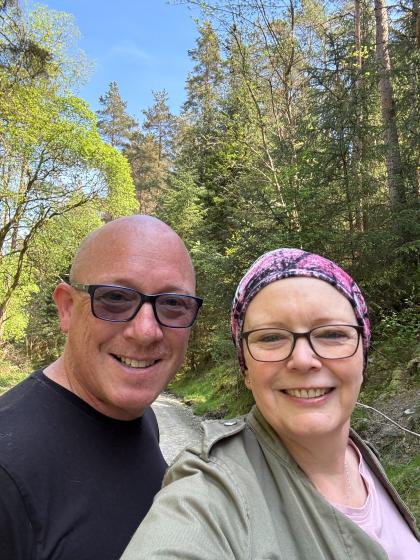
I went to lunch with a good friend one afternoon in November. Suddenly, I was hit with excruciating stomach pains, and she told me that it absolutely wasn’t normal.
That conversation was what really got me thinking about reaching out for help, as I hadn’t spoken about it before. Being open and honest with a friend about my health and how I was feeling led to a conversation that was potentially life changing. Who knows how much longer I would have continued to put up with it.
That same week I filled in the online request form for my GP and waited for an appointment. Two weeks later I still hadn’t heard anything, and someone at work reminded me that we have access to the doctor anytime system.
Sadly, it was then that I found a note on my NHS app asking me to call and make an appointment urgently. It was frustrating that I'd not been contacted in any other way.
That was when I finally decided to take things into my own hands and made an appointment privately thanks to my health plan through work. I was referred to gastroenterology and although it was a struggle to get an appointment so close to Christmas, I did manage to see them.
I had a CT scan and the very next day I received the ‘can you come in and see us’ call.
A shock diagnosis
They brought a Macmillan nurse into the room with me, so I knew immediately it was cancer, but you could have knocked me down with a feather when they said it was ovarian. Stage 3c high grade serous ovarian cancer. My assumption was that I had bowel cancer.
It’s sad to say I knew nothing about ovarian cancer but once I started learning more about it there were other things/symptoms I'd experienced.
Bloating was the main example, but I'd just put it down to menopause. It was a real ‘I wish I’d known this before’ moment. I think that’s why I’m so passionate about talking about it now. You're your own best advocate and even if it's menopause or something else, it’s always worth getting checked.
From the CT scan alone, they could see it was advanced and wanted to do a surgery first. I had a fantastic consultant who referred me onto the two-week pathway, and my local hospital made an appointment on 28 December. I can't fault them; my whole team has been amazing from start to finish.
Surgery, chemotherapy and balancing treatments
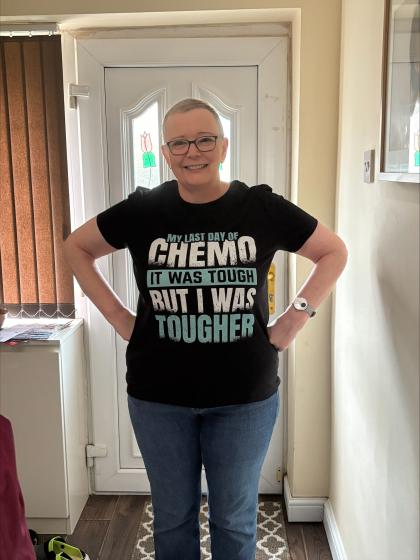
On 12 February 2025 I had my debulking surgery where they removed all disease they could see. It was a success. My CA125 level at diagnosis had been 806 and after surgery it was 76.
My chemotherapy treatment was a little more complicated than most as I also have a rare blood cancer called myelofibrosis and was a patient at the Christie in Manchester already.
It felt like everything was joined up from the hospital though, with my haematologist aware and sometimes involved with the decisions being made about my care.
It was agreed that I'd have the standard combination of paclitaxel and carboplatin but in 18 weekly sessions rather than a course of six longer sessions. I had blood tests every week to monitor my response to the treatment. During that time I did need a blood transfusion, but the good news is that it was working. Halfway through my CA125 levels had dropped again to just 13.
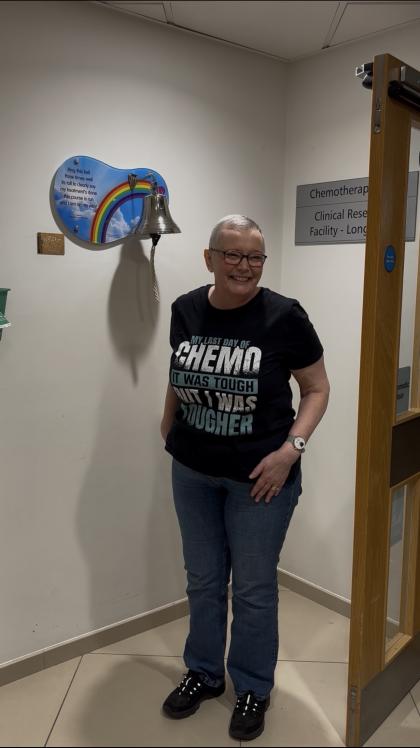
Through the hardest times, the unwavering support of my family and medical team kept me going. In August, a week before my last chemotherapy session, a CT scan revealed I was NED – no evidence of disease.
Reassurance and remaining vigilant
I'm currently still NED and attend six weekly blood tests and 12 weekly CT scans to make sure nothing is missed. I can’t take maintenance treatment because of the blood-related issues, so I know I have to stay vigilant about the possibility of recurrence.
But for now, I’m focused on living life to the fullest – and I hope that continues for a long time to come. One of the first things I did when my treatment finished was book a trip to Budapest. I want to make the most of every moment.
I’ve always been a glass half full sort of person. You can’t control what happens, just your response to it. However, I also know my experience is different to others in that I had minimal side effects and was able to do a phased return to work quite quickly after my last chemotherapy session.
Finding Target Ovarian Cancer and building connections
When I was first diagnosed I was advised not to turn to Google, but I did go on Facebook and found an ovarian cancer group.
Someone mentioned Target Ovarian Cancer on there and I quickly turned to the website. You can’t underestimate access to information that is right and up to date.
I also wanted to know what it would mean for me – not so much the surgery side of things, but I didn’t know anyone who’d had chemotherapy before and that scared me.
Having the chance to speak with people that have experienced similar things to you, asking direct and personal questions, was such an important part of it for me. I had such amazing family and friends around me, but I was aware that it’s affected them as well and found myself sometimes holding back so as not to burden them with a bad day or something negative. Having other women there as a support, on the phone or on screen, was a real blessing.
Everybody’s experience is different, but there's a shared understanding.
I wanted to share my story to show another version of it, and to provide a bit of hope for others. I’m also very passionate about raising awareness and have become quite vocal with friends and family about the symptoms and the importance of reacting to something that doesn’t feel right. Trust yourself and make the appointment.
If you’ve been affected by this story and would like to speak to a specialist nurse, you can call our dedicated support line on 0808 802 6000 or contact us: [email protected]. We're open from 9am until 5pm, Monday to Friday.
If reading this story has helped you, join the Ovarian Cancer Community to connect with more people affected by ovarian cancer.