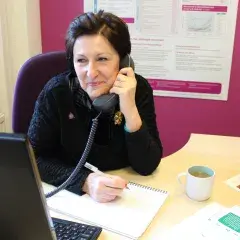

Target Ovarian Cancer Nurse Adviser, Val Lang, smiling while taking a call on our support line

Support line

Our specialist nurses are here for everyone affected by ovarian cancer. Call us on 0808 802 6000 (freephone), Monday-Friday, 9am-5pm.

Contacting our specialist nurses, Val, Anne or Rachel can be a real comfort. No question or concern is too small or big, and they've had hundreds of conversations with people coming to terms with ovarian cancer. Whether you have a diagnosis, are worried about symptoms or are a family member or friend affected by ovarian cancer, you're in safe hands.

Call: 0808 802 6000 (freephone), Monday-Friday, 9am-5pm

Email: [email protected]

Or, submit a form and our nurses will get in touch with you.

Contact our support line

Rachel and Val Target Ovarian Cancer nurse advisers

Why do people contact the nurses?

You can call us about anything to do with ovarian cancer. Some reasons why people have contacted us in the past are:  

  • Worries about ovarian cancer symptoms, or visiting the GP and having tests 

  • If they've just been diagnosed with ovarian cancer

  • Questions about treatment including chemotherapy, ovarian cancer drugs, surgery or clinical trials 

  • Emotional or mental wellbeing worries. Even if they have no idea what they're looking for, and just want to talk – there are no bad questions 

Frequently asked questions about the support line

What will happen if I call the support line? 

You will hear a brief welcome message before your call is answered by one of our three nurse specialists Val, Anne or Rachel. They'll introduce themselves, ask your name and help you to settle into the call. 

The nurse will listen to you and help you explain your situation, and any concerns or questions you might have. This is your time, and the nurse will give you as much of it as you need. 

Sometimes our nurses might be busy on other calls. If this happens, another staff member from our supportive services team will answer your call, ask you for your details and arrange for a nurse to call you back as soon as possible. 

What if I get upset?

Lots of people worry that they may get upset or cry when they call our support line. Please don’t let this put you off calling.

Our nurses understand that those who need our support are often in situations that cause them to be anxious or emotional. They'll give you the time and space you need to be able to explain your situation. 

If you don’t feel able to talk on the phone, why not complete our contact form? With your permission, our nurses can then call you to get the conversation started. 

Can I call again if I need more support? 

You can use our support line as much or as little as you need! 

We often support people over long periods of time. For others, they only need our support on one or two occasions. We're here to offer support in a way that feels right for you. 

I'm unsure whether the support line is suitable for me?

Our support line is for anyone affected by ovarian cancer including family, friends and loved ones. You can use our simple tool to help answer your questions about using our nurse-led support line.

Use the tool

Target Ovarian Cancer Nurse Adviser, Val Lang, taking a call on our support line
The support of the nurses has been very helpful and makes me feel I can ring even if it's a small worry. They make me feel any worries are important and they help very much.
Support line user

Still unsure about using our support line?

If you've got questions about whether our nurse-led support line is right for you, why not use our simple tool to help you find out?

The information provided by the support line is not intended to be a substitute for professional medical care. We would always advise you to check with your GP or your clinical team if you have any specific concerns about your condition or treatment. Please be aware we store information about people using the support line in line with our privacy notice

We are only trained to provide advice on the symptoms, risk, diagnosis, treatment and management of ovarian cancer in the UK.